SSI Overpayment Waiver: When You Don’t Have to Pay It Back
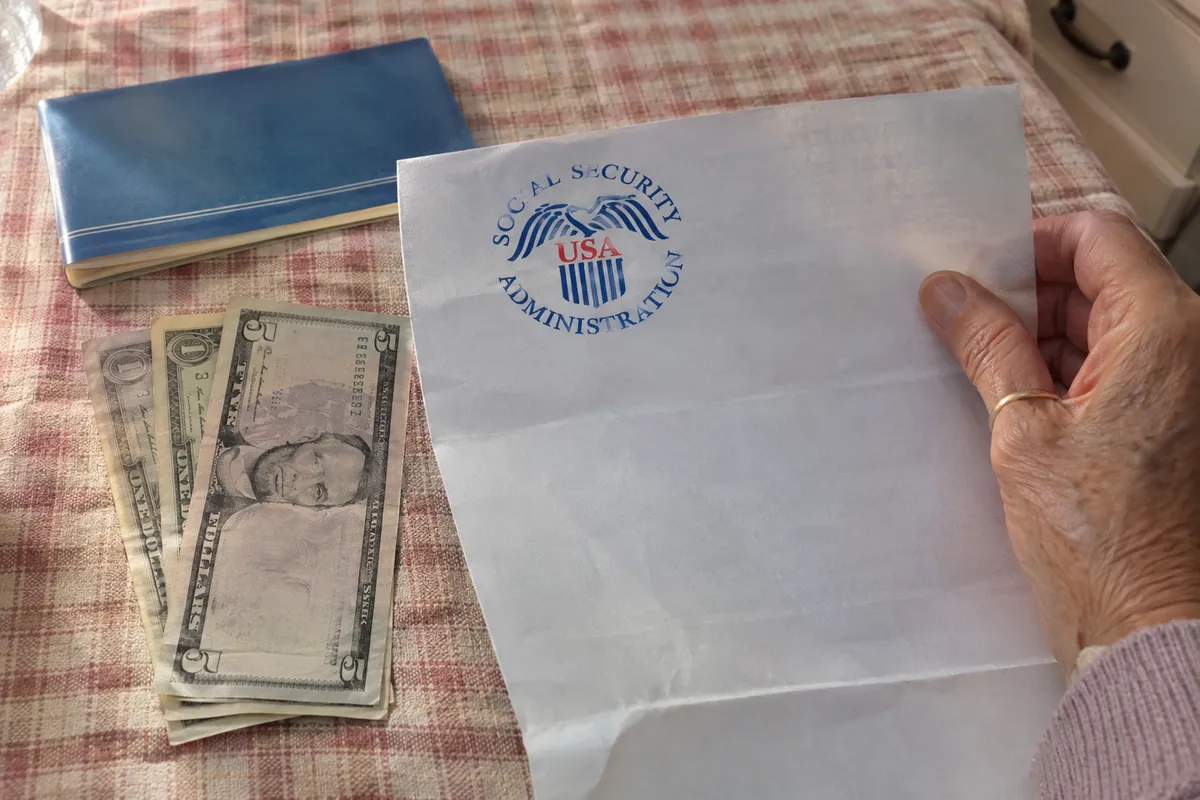
Your whole check is $994 a month. The letter on the kitchen counter says Social Security paid you $1,800 too much in Supplemental Security Income (SSI), and it wants the money back.
You don’t have $1,800. You read the letter twice anyway, looking for the part that says what happens now.
You can ask Social Security to forgive it. That’s called a waiver.
And it may not be too late, even for money that’s already been taken.
What comes out of a $994 check
Social Security takes the debt out of your SSI a little each month. The amount is 10% of your total monthly income, or your whole SSI payment if that’s smaller.
If SSI is your only income, that’s $99.40 out of a $994 check in 2026.
Do you also get a small pension or Social Security check? The amount is usually still about $99.40. The 10% is figured on your SSI plus the other income Social Security counts, and it can never be more than your SSI payment.

You have some time. The first smaller check comes at least 60 days after the date on the letter, and the letter prints which month.
Ask for a waiver within 30 days of the letter, and nothing is taken while Social Security decides. Ask after the smaller checks have begun, and they stop in the month you ask.
The two things you have to show
One: it wasn’t your fault. This is the half that gets argued over, so I’d put my effort here.
Two: you can’t afford to repay. If you get SSI now, Social Security’s staff manual treats this half as met. Nobody adds up your bills.
The same goes if you or a family member in your household gets SNAP food benefits, cash welfare (TANF), a needs-based VA pension, or Extra Help with Medicare drug costs.
If you’re still on SSI, Social Security already agrees you can’t afford to repay. The only question left is whose mistake it was.
What “not your fault” means
Being overpaid doesn’t make it your fault. The manual says so in plain words. Staff need evidence that you did one of three things:
- You left out something important.
- You said something you knew, or should have known, was wrong.
- You kept a payment you knew, or should have known, wasn’t yours.
The manual also lists cases where staff should start from the view that you weren’t at fault.
A change, in this table, means a change in your income, your savings, or who lives with you. A stay in a hospital or nursing home counts too.
Which of these sounds like yours?
| What happened | How Social Security treats it |
|---|---|
| You reported the change by the 10th of the next month | Not at fault |
| You reported it late, and the checks still didn’t change | Not at fault for the payments after your report |
| You went into a hospital or nursing home, and SSI wasn’t lowered | Not at fault |
| A Social Security employee told you something wrong, and that caused the overpayment | Not at fault. A spoken answer counts, and you’ll sign a statement about it |
| Your savings went over the SSI limit ($2,000, or $3,000 for a couple) by $50 or less | Not at fault, unless you hid it |
Source: SSA Program Operations Manual System (POMS) GN 02250.005, GN 02250.016, GN 02250.061, GN 02250.090.
Staff also have to weigh your age, health, memory, schooling, and how well you read English. A rule that’s clear to a caseworker isn’t always clear to the person getting the check.
So before you call, write down what you told Social Security and when. A date and a name are worth more than “I’m sure I told them.”
The $2,000 phone rule
If the original overpayment was $2,000 or less, there’s a shortcut. You call, say it wasn’t your fault, and ask for a waiver. You don’t fill in the form or list your bills.
At or under this amount, a waiver can be handled in one phone call. It’s the original overpayment that counts, not what’s left after payments.
One limit applies. For a married couple who both get SSI, each person’s share has to be $2,000 or less.
And you have to ask. Social Security only looks at a waiver when someone requests one.
The whole request can be two sentences: “I got an SSI overpayment notice for $1,800. It wasn’t my fault, and I’m asking for a waiver.”
Over $2,000: Form SSA-632-BK
Above $2,000, the request goes on Form SSA-632-BK. You can also ask the phone line or your local office for a copy. It’s long, but an SSI household skips most of it.
An early question asks whether you get SSI or similar help. Answer yes, and the form sends you past the pages about savings and bills to the signature.
You have three ways to turn it in:
- By phone. Call 1-800-772-1213. Staff can fill in the form with you over the phone.
- At your local office. Find it at ssa.gov/locator. Bring the letter.
- Online. Sign in at ssa.gov/myaccount and upload the finished form.
What if Social Security doesn’t agree? It can’t say no on paper alone.
First it has to let you see your file and talk to a person who wasn’t part of the first decision. You can do that in person, by phone, or by video.
Go to that meeting. If the answer after it is still no, the money starts coming out, even if you appeal.
If the amount is wrong
A waiver says, “I was overpaid, but I shouldn’t have to repay.” If you think the number is wrong, that’s an appeal instead, on Form SSA-561. You have 60 days from the day you get the letter.
You can file it online from Social Security’s Resolve an overpayment page, or ask for it on the same phone call.
You can ask for both. Not sure which one fits? Then I’d ask for both.
It’s not too late, even after it’s paid
Now, the money that’s already gone. The manual says you can ask for a waiver at any time.
That includes after the 10% has been coming out for months. It includes after the whole debt has been repaid, and after an earlier request was turned down.

If the waiver is approved, Social Security may also refund what it already took. The manual’s word is “may,” not “will,” and it depends on your case.
Ask anyway. It costs nothing.
Don’t count on the debt fading if you leave SSI, either. Social Security can take 10% of a later retirement or disability check. It can also take a federal tax refund.
What to do with the letter
- Find the overpayment amount, the months it covers, and the date printed at the top.
- Count 30 days from that date and mark the day on a calendar.
- Write down every time you reported a change: the date, how you did it, and who you spoke with.
- Call 1-800-772-1213 and say, “I’m asking for a waiver of my SSI overpayment. It wasn’t my fault.”
- Ask the person on the phone to fill in Form SSA-632-BK with you, if the amount is over $2,000.
- Say on the same call that you also want to appeal, if the amount or the months look wrong.
- Keep the letter and your notes together in one place.
A waiver is only looked at if you ask for it. That one sentence on the phone is the whole first step, and you can say it today.
Sources: SSA — Understanding SSI overpayments · SSA — Ask us to waive an overpayment · SSA — Resolve an overpayment · SSA POMS GN 02250.001 — Waiver requests · SSA POMS GN 02250.002 — Stopping recovery · SSA POMS GN 02250.005 — Fault · SSA POMS GN 02250.016 — Presumed not at fault · SSA POMS GN 02250.061 — Misinformation · SSA POMS GN 02250.090 — Excess resources of $50 or less · SSA POMS GN 02250.110 — Deemed unable to repay · SSA POMS GN 02250.230 — Form SSA-632-BK · SSA POMS GN 02250.350 — $2,000 or less · SSA POMS GN 02270.003 — Personal conference · SSA POMS SI 02220.001 — SSI overpayment recovery · SSA POMS SI 02220.016 — SSI recovery rate · SSA POMS SI 02220.017 — Reconsideration · SSA POMS SI 02220.020 — Recovery from Social Security benefits · 20 CFR 416.550 to 416.557 — Waiver of SSI overpayments · SSA — SSI federal payment amounts
This article is part of the Social Security Guide.