Medicaid 5-Year Look-Back: Putting Mom's House in Your Name Can Cost Years of Care
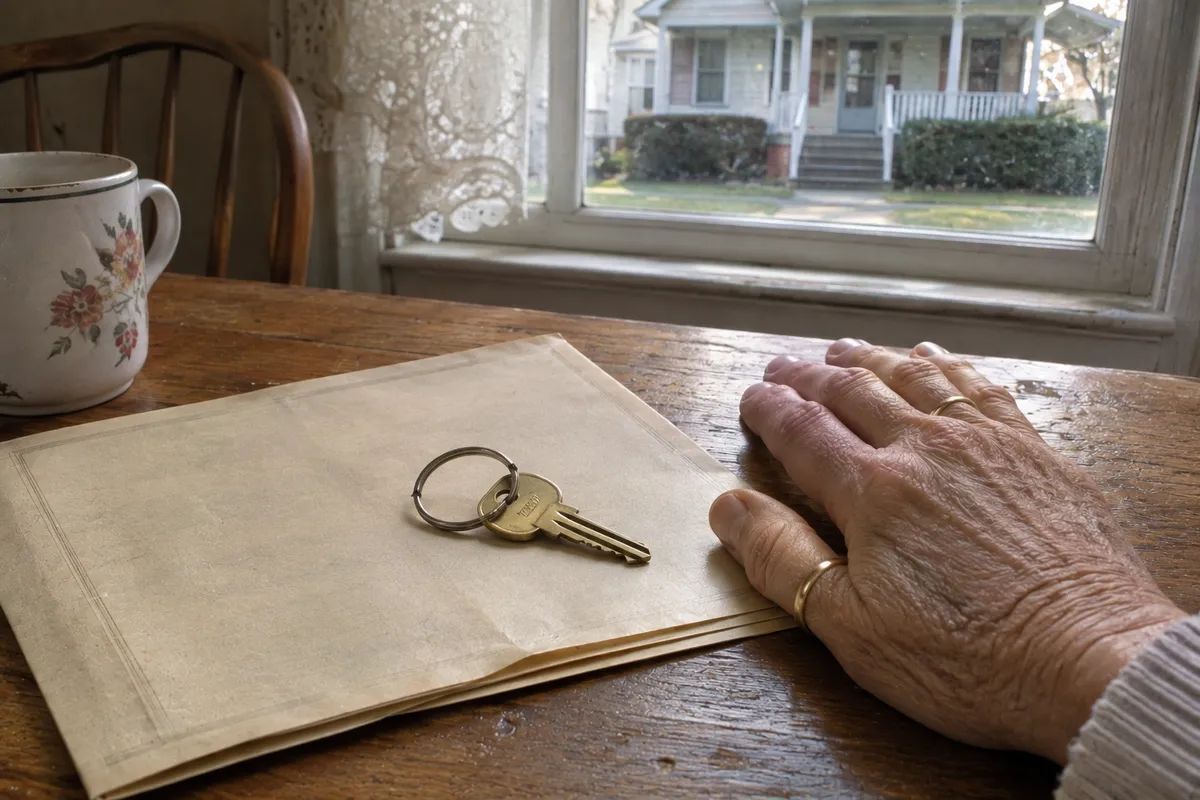
Say your brother brings a quitclaim deed to Sunday dinner. Put the house in our names, he says, and the nursing home can’t touch it. He wants Mom cared for and the house kept in the family.
Within five years of a Medicaid application, it can do the opposite.
In New York City, a $400,000 house given away means about 26 months with no Medicaid help for nursing home care. You and your family pay those months yourselves.
The deed also hands you Mom’s old purchase price, so selling the house later can leave a tax bill an inheritance wouldn’t.
How the Medicaid 5-year look-back works
When someone applies for Medicaid to pay for a nursing home, the state checks the last 60 months. It looks for money or property given away, or sold for less than it was worth.
The 60 months count back from the date Mom is in a nursing home and has applied. A deed signed six years earlier is outside the window. One signed three years earlier is inside it.
Giving Mom’s house away doesn’t hide it from Medicaid. It starts a five-year clock.
How the penalty is figured
The penalty is a number of months when Medicaid won’t pay for nursing home care. Each state sets a divisor, its average monthly cost of a nursing home.
| Where | Penalty divisor | $400,000 house gives |
|---|---|---|
| New York City (2026) | $15,282 a month | about 26 months |
| Western New York, Buffalo area (2026) | $13,765 a month | about 29 months |
| Texas (since Sept. 2025) | $262.37 a day | about 50 months |
Sources: New York State Department of Health, GIS 25 MA/14; Texas Health and Human Services, Medicaid handbook I-5100. Months are our math: value divided by the divisor.
Why would a cheaper state mean a longer penalty? Because the same gift gets divided by a smaller number.
New York uses the rate for the region where the nursing home is, as of the application date. Rochester’s is the highest, $15,675 a month in 2026.
Leftover days count too. So 26.17 months means 26 months plus about five more days of nursing home bills the family pays.

When the penalty clock starts
You’d think the penalty starts the day of the gift. It doesn’t.
It starts when Mom would otherwise qualify. That means she’s in a nursing home, has applied, and her savings are down to the limit, often $2,000 for one person. New York’s is much higher, $33,038 in 2026.
So a deed signed in 2024 can still mean months with no coverage in 2027. By then, her savings are already gone. If she was already in a nursing home and qualified when she gave it, the clock can start that same month.
Transfers that are allowed
Federal law lets Mom give the home, with no penalty, to:
- Her spouse.
- A child under 21, or a child of any age who is blind or disabled.
- A brother or sister who already owns part of the home and lived there for at least a year right before she went into the nursing home.
- A “caregiver child” who lived in the home for at least two years right before. The care must have kept her out of a nursing home during that time. States decide what proof they accept, such as mail at the home’s address or a doctor’s letter about the care.
The caregiver-child rule is often the one a family hopes fits, and it’s the hardest to prove. Ask your state Medicaid office before you count on any of these, so you know what your state accepts; medicaid.gov lists every state’s agency.
If the house was already given away, giving it back can end the penalty. Federal law lifts it when everything transferred is returned.
Keeping the house without giving it away
It’s hard to talk with Mom about the house she raised you in, and harder to be the one at the table who says wait. Does she still mean to come home? That one answer can settle a lot.
You and Mom may not need to move the house at all. The home usually doesn’t count against Medicaid while a spouse or a relative who depends on her lives there. It’s also generally exempt if she intends to return home.
There is a limit, though. Medicaid looks at Mom’s equity: what the house is worth minus what she still owes on it.
In 2026, if her share is above a limit your state sets between $752,000 and $1,130,000, Medicaid generally won’t pay for her nursing home. It doesn’t apply if a spouse, a child under 21, or a blind or disabled child lives in the home.
There’s one more step after Mom dies: the state must try to recover what Medicaid paid for her long-term care, if she was 55 or older.
It collects from her estate, what she leaves behind. The house can be part of that, depending on what your state counts.
The state must wait while a spouse is alive, or while a child is under 21, blind, or disabled. States must also offer hardship waivers, so the family can ask the state to skip or delay recovery when taking the house would cause real hardship.
If Mom is close to needing a bed, these two help: how Medicaid pays for a nursing home and what a nursing home costs per month.
The tax bill a gifted house leaves behind
When you get a house as a gift, you also take Mom’s original cost for tax purposes. When you inherit it, the cost resets to its value on the day she died.
Say Mom paid $90,000 for the house, and it’s worth $400,000 now. If she gives it to your brother and he sells, his taxable gain is about $310,000. That’s a big bill for a gift.
If he inherits it instead and sells for $400,000, the gain is about $0. Would you rather your family pay tax on $310,000, or on nothing?

Selling a gifted house also usually misses the home-sale tax break, which lets most sellers skip tax on up to $250,000 of gain, or $500,000 for a married couple. You don’t get it unless you’ve owned it and lived in it for two of the last five years.
If Mom sells it herself and can no longer care for herself, her time in a licensed nursing home can count as living there. She needs to have lived in the house at least a year during the five years before the sale.
As for gift tax, Mom will likely file a form but owe nothing. Each year, a person can give up to $19,000 in 2026, or $20,000 in 2027, to anyone without reporting it.
A house is worth more than that, so she’d file Form 709 with the IRS by April 15 of the next year. Tax is owed only after her lifetime gifts above the yearly amount pass $15 million in 2026, or $15.48 million in 2027.
Other risks of a house in your name
Once the house is yours, your problems become its problems. A divorce, a bankruptcy, or a lawsuit against you can reach it.
Mom also loses control. She can’t sell or borrow against a house she no longer owns. Is that a trade you’d both be comfortable with?
Bring these to the attorney
- First, check whether the house is already protected: a spouse or a dependent relative living there, or Mom meaning to come home.
- Write down any gifts Mom made in the last five years, with dates and values.
- Find your state’s penalty divisor: call the state Medicaid office, or search the handbook on its website for “transfer penalty.”
- Gather proof of who lived in the house and gave care for the last two years, such as mail at that address and a doctor’s letter.
- Find what Mom paid for the house: her closing papers, or the deed record at the county recorder’s office, plus receipts for big improvements. Bring them to a tax preparer to compare the gain from a gift versus an inheritance.
- If the house was already deeded away, ask the attorney whether giving it back or filing Form 709 is needed.
- Find an elder law attorney through the National Academy of Elder Law Attorneys at naela.org, or the Eldercare Locator, before anyone signs a deed.
The deed that was meant to protect it
Your brother wants the same thing you do: Mom in good care and the house still in the family. A deed signed this week may get neither.
At the next Sunday dinner, bring the attorney’s name instead of the deed. If a spouse lives there, or Mom means to come home, the safest house may be the one none of you touches yet.
Sources: 42 U.S.C. 1396p · NY DOH — GIS 25 MA/14, 2026 regional rates · Texas HHS — Transfer of assets divisor · Texas HHS — Penalty period · CMS — 2026 SSI and spousal impoverishment standards · Medicaid.gov — Estate recovery · SSA POMS SI 01130.100 — The home · IRS — Publication 551, Basis of assets · IRS — Gift tax FAQs · IRS — Publication 523, Selling your home · IRS — 2027 inflation adjustments · NY Office for the Aging — 2026 financial levels
This article is part of the Medicare and Nursing Home Guide.