Can Debt Collectors Take Social Security? Not for Credit Cards. Here's What's Protected
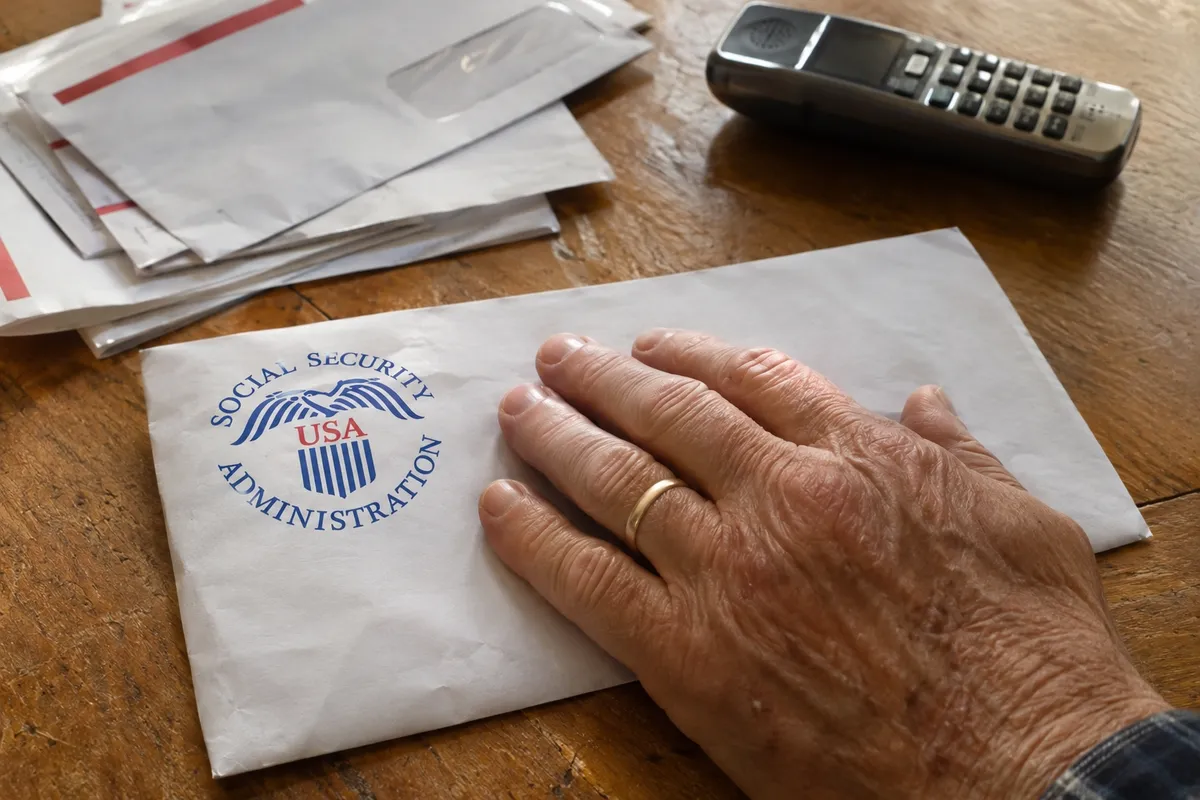
Can a collector really take your Social Security check over an old $4,800 card bill? That’s what the caller said, and when that check is all the income you have, a call like that lands hard. It’s a threat the collector can’t carry out.
Federal law says Social Security can’t be garnished for private debts. That goes for SSI too.
One thing does weaken that protection: getting your benefits by paper check instead of direct deposit.
Can debt collectors take Social Security?
Not for private debts. The Social Security Act shields future benefits from garnishment and from other court orders to collect. That covers credit cards, medical bills, personal loans, and most other debts you owe a business.
To reach money in your bank account, a collector must first sue you and win a judgment, a court ruling that you owe the money. The Consumer Financial Protection Bureau (CFPB), the federal consumer watchdog, says so plainly. Even then, Social Security money in the account is generally protected.
A collector can call, write, and even sue. It still can’t take your Social Security check.
Who can take part of a check
The exceptions are mostly money owed to the government or to family, and SSI is shielded from nearly all of them.
| Debt | Can it take regular Social Security? | SSI? |
|---|---|---|
| Credit cards, medical bills, personal loans | No | No |
| Federal income taxes (IRS) | Yes, up to 15% a month, from retirement and survivor checks | No |
| Other federal debts, like student loans | Yes, up to 15% a month, and the first $750 a month is protected | No |
| Child support or alimony | Yes, through a state court or child support agency order | No |
Sources: Treasury Fiscal Service; IRS Federal Payment Levy Program; CFPB; 42 U.S.C. 659.
For a federal student loan you’ve fallen behind on (in default), the Treasury can take part of your check to pay it. That’s called a Treasury offset.
In January 2026, the Education Department said it would delay these collections. That can change, so check studentaid.gov or call the number on any notice before you assume you’re covered.
Social Security can also hold back part of your own check to recover money it overpaid you. That’s a separate process, and you can ask for a smaller monthly amount.
How much the government can take
For federal debts collected through Treasury, $750 a month of your check is always left alone. Beyond that, Treasury can take up to 15% of each monthly check.
On an $800 check, that means only $50, because $750 has to stay. On a $2,000 check, 15% is $300.

The IRS has no $750 floor. A levy is the IRS taking money to pay back taxes. It applies to retirement and survivor checks, not disability benefits.
The IRS also generally leaves out people with income at or below certain levels tied to federal poverty guidelines. For everyone else, it takes 15% even if what’s left is under $750.
It sends a notice first and gives you 30 days. Call the number on that notice within those 30 days. Ask about a payment plan, or about hardship status, which means the IRS agrees you can’t pay right now.
Your bank’s two-month rule
If a collector does get a court order, your bank has rules to follow too. Within two business days, it must look back at the last two months of federal benefits direct-deposited into your account.
That amount is protected. The bank can’t freeze it, and it can’t charge a garnishment fee against it. You keep full access to it.
Picture the order reaching your bank on the 10th. Your account holds $5,000: two $2,000 Social Security deposits plus $1,000 from elsewhere. By the 12th, $4,000 is marked protected, and you can still use it.
The other $1,000 can be frozen. The bank must send you a letter within three business days of that review, saying what it protected. If your card is declined, call the bank that day and ask for the protected amount in writing.

The protection covers two months of deposits or your balance, whichever is smaller. It also doesn’t apply when the order comes from the federal government or a state child support agency.
What collectors can’t say
Federal law bars debt collectors from threatening an action they can’t legally take. Threatening your Social Security over a credit card is one of those.
The CFPB has reported that collectors sometimes do it anyway. If you hear it, write down the date, the name, and what was said.
Owe it or not, ask for it in writing. Within 30 days of the collector’s first written notice, you can dispute the debt in writing. The collector then has to stop until it sends proof.
You can also write to tell it to stop contacting you. That letter doesn’t erase the debt, and the collector can still tell you if it’s suing. But the calls stop.
I’d send the dispute letter first, because it makes the collector prove the debt before anything else. For either letter, use the address on the collector’s notice, send it by certified mail, and keep a copy. The CFPB has sample letters; search “debt collection sample letters” at consumerfinance.gov.
A debt that’s old enough may be past suing. A collector can’t sue, or threaten to sue, on a debt past your state’s time limit. That limit varies by state.
Don’t pay anything, or say you owe it, until you know that limit. In some states, even a small payment restarts the clock. A legal aid office can tell you where your debt stands; find one at findlegalhelp.org.
Paper checks and mixed accounts
The bank’s automatic protection only covers benefits that arrive by direct deposit. With a deposited paper check, the bank doesn’t have to protect two months, the CFPB says. You may have to go to court to prove the money came from Social Security.
I think that’s the unfair part of the rule. The people still cashing paper checks are often the oldest, and the least able to spend a morning at the courthouse.
Moving your benefits into another account weakens the bank’s automatic protection the same way. The protected amount is figured from federal deposits made into that account. Money transferred in from somewhere else doesn’t carry the label.
So keep your benefits in the account they’re deposited to, and try not to mix them with other money.
Still on paper checks? You can switch to direct deposit in your my Social Security account at ssa.gov, by calling 1-800-772-1213, or at your bank. Without a bank account, the Direct Express debit card is the government’s option.
If the debt belonged to a parent who died, read what happens to debt when someone dies.
Protect your check
- Switch to direct deposit if you still get a paper check: in your my Social Security account at ssa.gov, at 1-800-772-1213, or at your bank.
- Keep Social Security in its own account if you can.
- Ask any collector to send its claim in writing, and dispute it in writing within 30 days if it’s wrong.
- Write down every threat about your benefits, and report false ones to the CFPB at consumerfinance.gov/complaint.
- Call the number on any IRS levy notice within 30 days.
- Don’t pay or admit an old debt until a legal aid office tells you your state’s time limit.
- Claim your exemption in writing, by the deadline on the notice, if your account is frozen.
When the caller says your check is at risk
You can say it plainly: “My income is Social Security, and it’s protected.” Then hang up and write down what they said.
A collector who threatens your check over a card bill is the one likely breaking federal law, not you.
Sources: 42 U.S.C. 407 (Social Security Act §207) · CFPB — Can a debt collector take my Social Security? · 31 CFR Part 212 · 31 CFR 285.4 · Treasury — Treasury Offset Program FAQs · IRS — Federal Payment Levy Program · CFPB — Time-barred debt · 15 U.S.C. 1692e · 15 U.S.C. 1692g — Validation of debts · 15 U.S.C. 1692c — Stopping contact · 31 CFR 212.4 — Orders from the U.S. or a child support agency · Education Department — January 2026 collections delay
This article is part of the Social Security Guide.